New study: Inequality becomes a question of power
Post information
Author

Susanne Rudolf
Share post
When the powerful gather in Davos, one issue is often left off the agenda: growing inequality. The new Oxfam report shows how wealth concentrates political power – worldwide and in Switzerland.
When wealth shapes politics
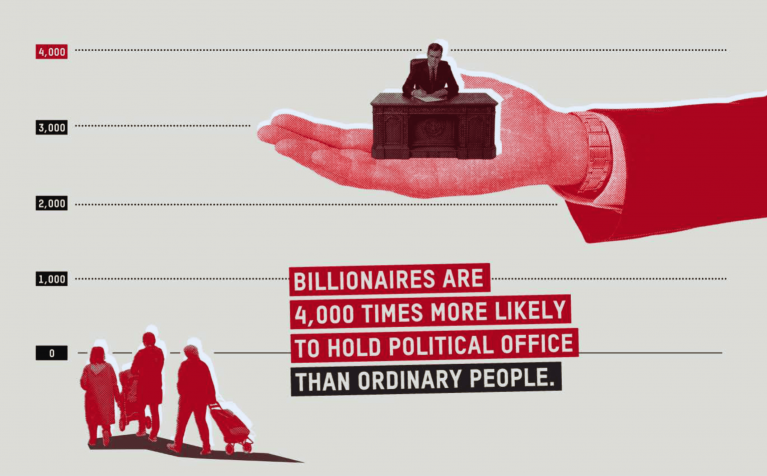
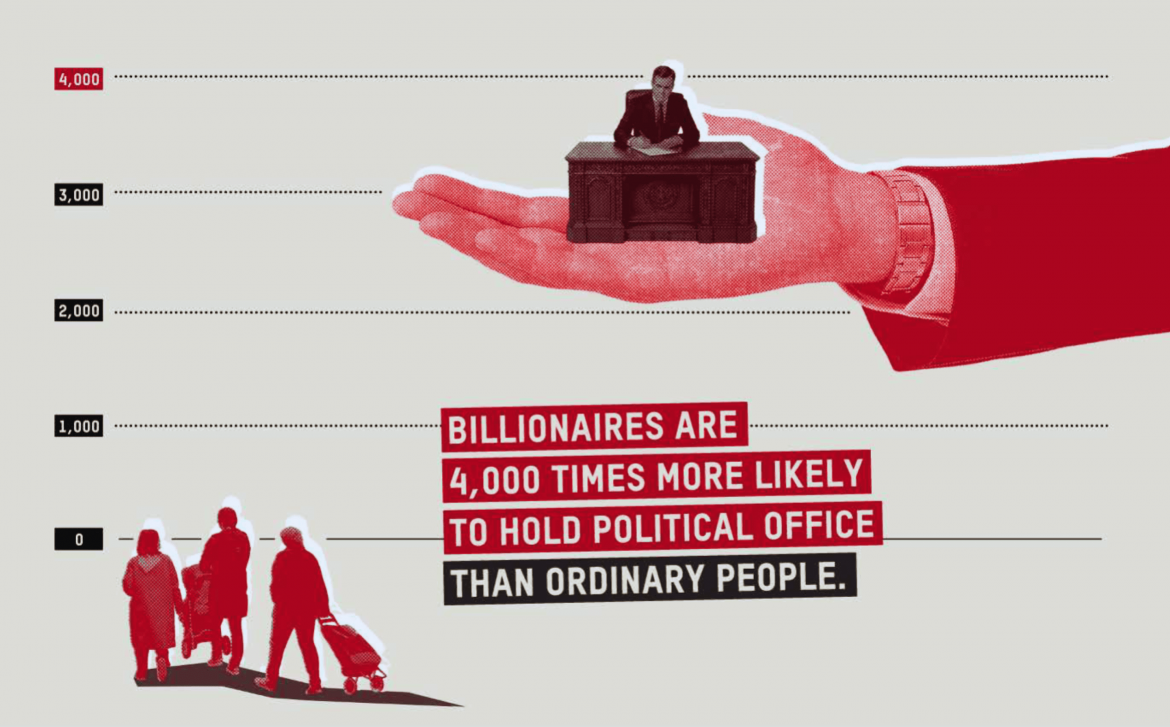
Economic inequality is increasingly becoming political inequality. The super-rich use their wealth strategically to influence rules, public discourse and decisions in their favour. In doing so, they dominate election and referendum campaigns, shape public debate, gain privileged access to political institutions – or get elected to political office themselves.
Research data from 136 countries shows: As economic inequality grows, political power also becomes more concentrated. Political decisions then systematically reflect the interests of high-income groups more closely than those of people on low incomes. Media power plays a central role in this: large parts of the global media landscape, including social media and AI platforms, are in the hands of a small number of billionaires. Nine of the ten largest social media companies are controlled by just six billionaires.
At the same time, civic and political space is shrinking worldwide. People with low incomes and little wealth face growing barriers to having a say in political decisions. In many places, protests against inequality and rising living costs are increasingly criminalised or suppressed. Civil society organisations and trade unions are particularly affected. Studies show that highly unequal societies are up to seven times more likely to experience democratic backsliding than more egalitarian societies. Inequality is thus becoming a major driver of democratic erosion worldwide – including in countries with well-established democratic institutions.
Switzerland in figures
Wealth disparities in Switzerland are substantial:
- 41 billionaires hold a combined wealth of around CHF 197 billion.
- In 2025, this wealth grew by CHF 14.6 billion.
- On average, a billionaire needs just 107 minutes to earn as much as the average person in Switzerland earns in an entire year.
- The richest 1 per cent own around 31 per cent of the wealth, while the poorest 50 per cent hold just under 4 per cent.
Wealth also enables a constant presence in politics and the media. Even in Switzerland’s stable democracy, wealth can be converted into political power. The presence of the super-rich in Parliament, such as Peter Spuhler, Walter Frey and Martullo-Blocher, has been established for years and is rarely questioned. With Christoph Blocher, a billionaire even held a seat on the Federal Council. This shows that wealth not only facilitates access to politics but also enables sustained media visibility. The rise of the Swiss People’s Party (SVP) since the 1990s can be attributed in part to the enormous financial resources of its wealthy representatives, which allow them to exert considerable influence over the political agenda and public discourse.
Corporations and their billionaire owners exert considerable influence over referendums, particularly those concerning tax and economic policy. Through business associations such as Economiesuisse, they can use their financial resources to shape the political narrative and, in turn, steer public opinion.
Finally, the close ties between the federal administration, business associations and multinational corporations are evident in the direct involvement of business representatives without a democratic mandate in government decision-making—for example, in tariff negotiations with the United States.
What is needed now
Extreme inequality undermines democratic structures. Where wealth concentrates political power and people with limited resources are pushed out of political processes, democratic institutions come under pressure.
To counter this trend, Oxfam and Solidar Suisse call for limits on the concentration of economic power through fair taxation and clear rules governing political influence.
In light of the global decline in civil and political rights, two points are central:
- Strengthening civil society, trade unions and social movements as key drivers of democratic participation.
- Protecting civil and political rights, particularly the rights to organise, protest and participate in decision-making.
This is where Solidar Suisse comes in. Together with partner organisations in the Global South, we empower people and organisations to claim their rights, organise and secure a voice in political decision-making. Fighting inequality means protecting democracy—in Switzerland and worldwide.
Together, we can do something about it
Since 1936, we have been tackling the root causes of global inequality. Join Solidar Suisse and stand with us for justice.
Post information
Author
Susanne Rudolf