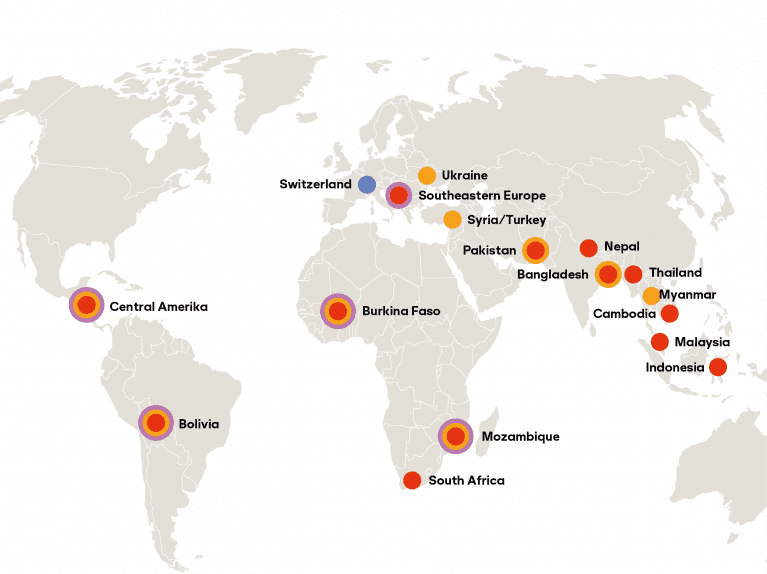
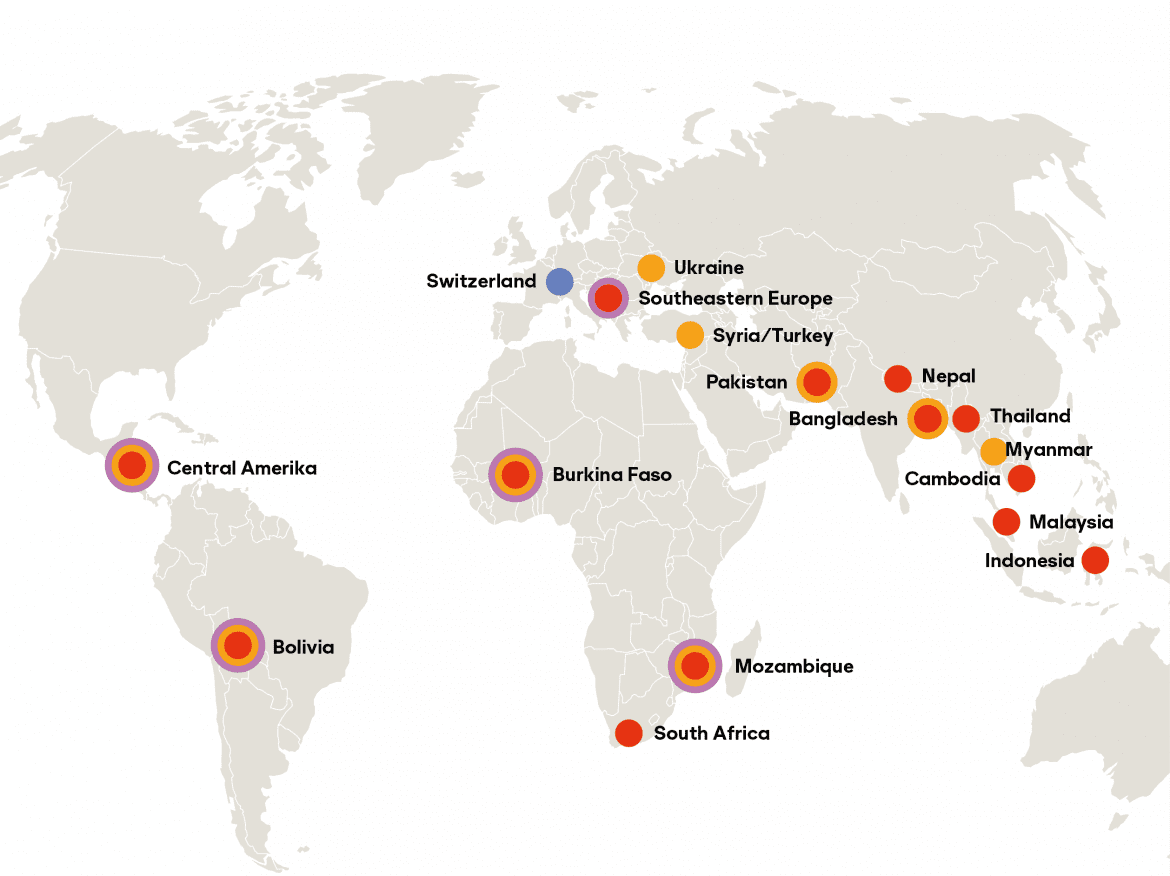
By 2025, global crises had intensified further: armed conflicts, climate-related disasters, growing inequality – whilst at the same time, massive cuts were hampering international cooperation. Yet it was also a year in which young people around the world protested against inequality, autocratic regimes and corruption, and demanded opportunities for all. Despite difficult circumstances, we have worked with our partners to create democratic spaces and promote decent work.
Our global commitment was particularly focused on those affected by conflict, natural disasters, and extreme inequality. In development cooperation, we invested in decent work, vocational training, and the strengthening of democratic participation in order to give local people the opportunity to improve their living conditions. In the area of humanitarian action, we focussed on overcoming acute crises and supporting people in need. In Switzerland, we raised awareness on the link between consumption, working conditions, and inequality.
25 million in turnover
Of the 25 million Swiss francs spent in 2025, a total of 85 percent went to our international programs in development cooperation, humanitarian action, and campaigning.
We invested 7.4 million francs in development cooperation, for example in Burkina Faso, Southeast Asia, Honduras, Bangladesh, and South Africa. 10.4 million francs went to humanitarian action in countries such as Turkey, Syria, Myanmar, and the Ukraine.
Voices from the projects
Tina Piliia, Country representative in the Ukraine
“What affects me most in Ukraine is not just the scale of the destruction but also the quiet perseverance of the people who have to live with it every day. After four years of war, we have just experienced the coldest winter for forty years, while repeated attacks on energy installations have resulted in power cuts, often lasting for twenty hours. People have had to make do without heating, putting those affected by displacement, poverty or disability at particular risk. Solidar Suisse supports veterans and displaced men, women and children in areas where systems have broken down. We provide support for local organisations and community- based case management in order to restore dignity, resilience, and a context for healing where they are most urgently needed.”
Repon Chowdhury, Director of our partner organisation Bangladesh Occupational Safety, Health and Environment Foundation (OSHE)
“Tanneries, together with shoe and leather goods factories, employ nearly one million people in Bangladesh to manufacture the country’s second most important export goods. Switzerland is one of 53 countries to which Bangladesh exports its leather goods, more than half of which are shoes. Yet wages are low in the leather industry, employees are exposed to toxic chemicals, and there is no social security net. That is why OSHE is fighting for better working conditions and stronger trade unions, and why it is helping factories to comply with employment and environmental standards which will enable them, for instance, to satisfy the requirements of the new EU Corporate Sustainability Due Diligence Directive.”